Two of the most fundamental tenets of Jewish faith, in Rambam's Thirteen Princilpes of faith are :
" I Believe with complete emunah that HaShem - blessed be His name - is the creator and guide of all created beings, and that alone He has made, does make, and will make all things. "
" I believe with complete emunah in the coming of the Moshiach, and although he may tarry, nevertheless, I wait every day for him to come! "
Moshiach, which means " Anointed One " will be a descendant of the house of Dovid HaMelech, from the tribe of Judah. Moshiach is not a sort of new concept within Judaism. Rambam refers numerous times to a redeemer and redemption. There are also many pesukim in the Torah referring to the coming of the Moshiach, and instructs Jews to believe in and wait for the Moshiach.
Nearly 2000 years ago, the Jews were forced to leave their homeland, and sent into golus. For as long as the Jewish nation exist there has been persecutions and we were forced to wander from land to land. The slavery in Mitzrayim, the destruction of the two Beis HaMikdash, the Crusades, the Pogroms, the Shoah, and antisemitism.
Daniel had a vision of four times the Jewish people would go into golus. A vision of four great beasts.
The first was like an lion, and the second one was a beast similar to a bear. The third one looked similar to a leopard, and forth one was fearsome and powerful.
Daniel's prophecy, and each beast symbolizes a golus that the Jewish people had to undergo. The first one was Babylon, the second one Persia, the third one Greece and the final one is Edom.
Even at the darkest times of our lives we always had hope, and did adapt. Building communities, mikveh's, and Beis Midrash. The word Edom in a certain prophecy refers to other nations, not necessary to Rome.
Avraham believes that the fourth kingdom that places the Jewish people into golus were the Yishmaelim- those who follow the Islam. The fourth animal in Daniel's prophecy is described as a fearsome and powerful beast, and he viewed that under Islamic rulers as the most severe towards the Jews.
Unlike our Sages, Nachmanides explains that the four kingdoms are not defined by power or strength, but by the fact that they placed the Jews in golus. Despite the many threats to our existence that came after the Romans, we have not been redeemed from golus yet.
Why did HaShem placed the Jewish people in golus?
" It was because of our sins. "
Shalosh Regalim, which means the three feet, and refers to the three times when every Jewish man was obligated to stand before HaShem in the Beis HaMikdash:
1. Pesach
2. Shavuos
3. Sukkos
The sacrifices and rituals which are connected to these holidays, would bring three different forms of offerings: Olath Reiyah, Chagigah and Shalmei Simcha.
These sins as the Musaf verse state, weren't just a mistake. The Talmud tells us that during the destruction of the Beis HaMikdash, Avraham was standing in the ruins, pleading with HaShem on behalf of the Jewish people.
HaShem asked Avraham, what His beloved were doing in His house. Avraham replied that he had concerns about the fate of his children. HaShem answered:
" Your children have sinned, and have gone in golus."
Avraham asked: Did they only sinned in error ? And perhaps that only be a few that sinned?
" With many " HaShem replied.
" Maybe if You had waited, they would have done teshuvah " Avraham pleaded.
When you do evil, then you rejoice, HaShem replied.
The sins commited, and the golus that followed was necessary to cleanse the Jewish nation of these sins. But it was not only punishment why the Jewish people where sent into golus. There was this great plan behind golus, behind all four of them. To be a light unto the nations. Every soul has its own sparks scattered, and no soul is complete until it has been redeemed. These sparks are related to its being.
When we went from land to land, from occupation to occupation, which seems only random, but it is by Divine Providence, and guides us to these opportunities as our soul intimately connects with its source.
There is nothing to escape golus, not even devoting day and night of Torah learning. It is only through challenges that HaShem sends our way, that we free these sparks from golus, in achieving a personal redemptotion. This can hasten the final redemption for all of us.
" Behold I will send to you Eliyahu HaNavi before the arrving of the great and awesome day of HaShem. - Malachi 3: 22- 24.
Eliyahu will appear before the coming of the Moshiach, and he will also perform several important functions.
Ezekiel describes the war of Gog and Magog, which will be prior to the coming of the Moshiach. To this point in time we don't know exactly the identity of Gog and Magog, whether this is a physical or a spiritual battle. Whether it refers to one person or to the nations.
But the most important part of our redemption is the promise of the ingathering from the Diaspora. All Jews will be settling in their tribe part of the Holy Land. No Jew will be left behind, this including the Ten lost tribes.
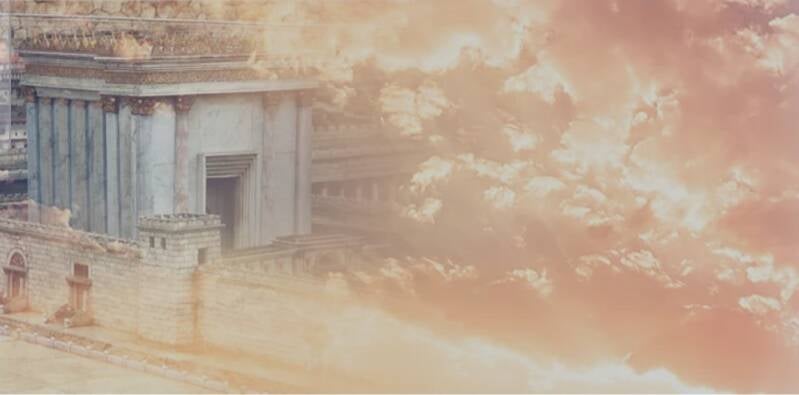
The Beis HaMikdash will be rebuilt in Yerushalayim, and will be the focus of all nations - Yeshayahu perek 2
While we are limited to understand HaShem in all His ways, the Moshiach will teach us about HaShem, and we will " see "- understand - what we are learning. The Moshiach will teach us the unknown dimension of the Torah. What we are learning today is naught in comparison to the Torah the Moshiach is going to teach us.
Every time we use an object in service of HaShem serves a purpose, and revealing the Divine essence of creation.
We been scattered to the four corners of the earth. The sparks of holiness embedded in creation travels throughout the world. In every country we recite blessings, performing mitzvahs, davening, learning Torah, keeping Shabbos, mezuzahs on our doorposts, using the waters of the land we live in as a mikveh.
The Menorah light, our Shabbos candles, and the Light of the Torah brings holiness.
Redemption is not about radical change, but the uncovering of our truest self. Which we accomplish through golus. The tragedy of golus is not only defined by persecution and suffering.
Golus is also the time when HaShem's presence is concealed, and it might be hard to feel the relationship we have with HaShem. The love that HaShem has for us. By learning Torah and doing the mitzvos, we learned to connect to HaShem.
" Because of our sins we were exiled from our land. " For even one who is physically in Eretz Yisoel, is still in golus ! "
Today we can prove the relationship with HaShem is real, by making a home for HaShem in the physical world. The world is a mishmash of objects and events going nowhere. But there is a plan, buried deep down somewhere in all the madness and chaos. Everything that happens, good or evil, is a step towards its fulfillment. Life has a purpose, a mission to somewhere. Somewhere good.
With the coming of the Moshiach, there is going to be a turnaround. The Rambam says, that nobody knows exactly what is going to happen. It is HaShem who is the master of all plans.
Belief in the coming of the Moshiach is an important part of Judaism. The Tenach is filled with prophetic pesukim, and reference of the redemption. The Talmud and Midrashim discussing Moshiach. Rambam listed the belief in the Moshiach as one of the essential tenets of faith. The Mishneh Torah states:
" One who does not await his coming, denies not only the prophecy, but also the Torah and Moshe Rabbeinu.
Jewish liturgy is filled with davening for geulah, and the coming of the Moshiach. Several texts of the Amidah and in the Shema, the most important prayers, and recited three times each and every day.
All we need to do is teshuvah- Sanhedrin 97b.
Teshuvah is not only standing before HaShem, regretting our sins and transgressions, promise to never to do them again, and leave them behind. I think teshuvah is like coming home, lost in a big world full of confusion and temptations, and then there is this light guiding us home, back to HaShem. We can only do teshuvah when we are sincere, when our return to HaShem is with all of our heart and soul.
May we be zoche to see the coming of the Moshiach soon!