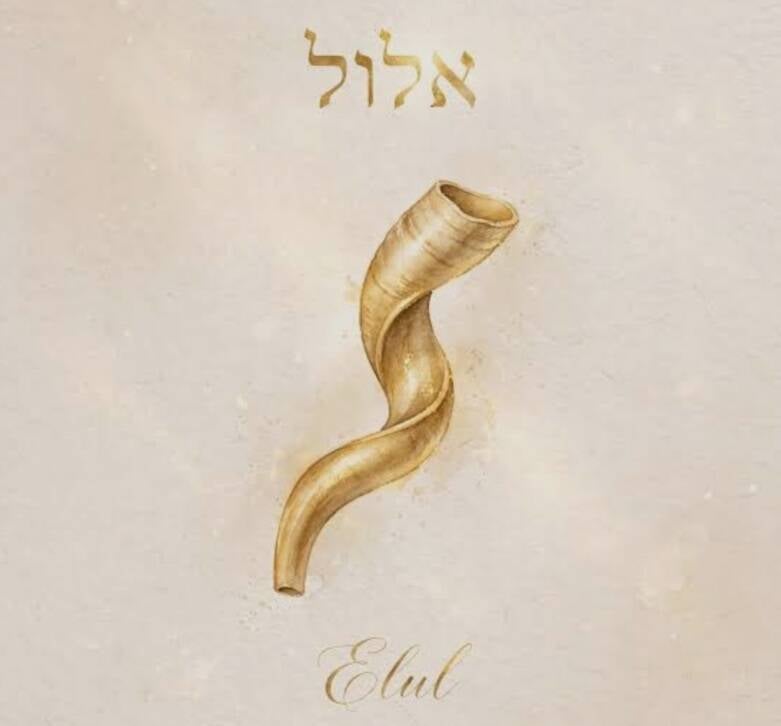
Elul is the Twelfth month of the Jewish calendar and the sixth month counting from the month of Nisan. It has a element of Yessod, and is the sixth Sefira that delivers the light to the world, Malchus which is the lowest safira on the Sefiros.
The connection to Yessod is made with davening and Tzedakah which has a huge impact and benefits this month. Reading Tikunei Zohar during the 40 days does help cleanse our soul.
During the month of Elul, we try to improve in area's we are lacking. On what area's should we focus?
Maybe we could commit ourselves to more Torah learning, or better concentration during davening. All very important area's to focus on, but do we ever think about increasing our Ahavas Yisroel? Focus on chesed and being more positive towards our fellow Jew.
The greatest baalei mussar in pre- war Europe established Ahavas Yisroel in his yeshiva as the main principle during Elul.
Before HaShem, the hidden is known to Him just like the revealed. Our obligation before Yamim Noraim- the Ten Days of Awe- is to accept to work on the mitzvah of V'ahavta l'reacha kamocha- love you fellow as yourself, for the whole year.
Through this mitzvah there will be a unity among all Jews- servants of HaShem.Through Malchuyos we will improve our ways, and be ready to work on ourselves to love our fellow Jew in developing a unity. This is a part of teshuvah before Yom Kippur.
You might think that this is too difficult to achieve, but it will slowly become easier, especially through the learning the Tomer Devorah.
Throughout the year but especially during the month of Elul, focussing on our own personal growth and serving HaShem in the best possible way we can is great, but as klal Yisroel is even better. The more we focus on loving our fellow Jew in achieving being a unity, the better the service becomes.
Every morning and evening we accept HaShem's kingdom through davening the Shema & Krias Shema She'al HaMitah, we declare that HaShem is in complete rule and control of heaven and earth, and all four directions of the world.
Shema Yisroel, is not about ourselves individually, but about klal Yisroel.
The acceptance of HaShem's Kingdom depends on our connection with our fellow Jew. The more we love and care for each other, the more we are part of HaShem's Kingdom.
When Elul arrives it is time to let you mezuzah and tefillin to be checked. Read the artikel here on how to check your mezuzah and tefillin in the right way.
Selichos
And again I come to You HaShem, after a year of asking You for forgiveness.
Let me fix what I have broken...Just open the door for me.
Selichos is different by Nusach liturgical davening and musical tradition. The piyyutim, and music between Ashkenazi, Sephardic, and Chassidic tradition is different in arrangements and selections in the opening and closing piyyutim.
Chassidic Nusach Ari- Selichos is not found in most Siddur's (accept Tehillas HaShem ) Chabad has Selichos - A Hebrew Edition you can download and print out.
Selichos contains;Tehillim, the Asehamnu, Shelosh - Esrei Middos HaRachamim and concluding Tachanun and followed by Kaddish.
The " Adon HaSelichos " is omitted from Nusach Ari, as it is not traditional Chassidic, but Sephardic and Mizrahi heritage.
The beautiful Adon HaSelichos by Mendy Portnoy.
Rosh Hashanah
The seventh month, on the first day of the month, you shall observe a day of rest, a memorial proclaimed with the blast of the Horn,a holy convocation and you shall not do any servile work. ~ Vayikra 23: 24-25
It is fascinating that Rosh Hashanah is the Jewish New Year, as it is not been called this in the Torah, the truth is that this day comes in the seventh month of calendar year and was given a different name. The Jewish New Year starts in the spring in the month of Nisan, we can read this in Shemot 12:2, which is the new agricultural year.
However the Sages gave much more significance to the first Shabbos of the fall holidays, eventually became it a spiritual New Year, and is known as Yom Teruah, which means ' The day of the Shofar, ' this day became Rosh Hashanah, the head of the year. Rosh Hashanah is to represent the 'Day of Repentance ' it also marks the start of the Ten-Day periode of spiritual self- examination and repentance which be fulfilled with Yom Kippur, the ' Day of Atonement ' is about intensive davening this day, during the Ten-days the gates of prayer and repentance are more open than any other day during the whole of the year.
As Rosh Hashanah is Yom Teruah, In prayer we call it Yom Harikaron ' The Day of Remembrance ' but also Yom Hadin, which means ' The Day of Judgement ' this is the big day for us as HaShem determines the fate of all of us a year ahead.
Rosh Hashanah together with Yom Kippur, ten days later, is part of Yamin Nora'im, also known as the Ten days of Awe.
On the night of Rosh Hashanah we wish men L'shana Tovah tikatev vetichatem' and the women with L'shana Tovah Tikatevee v'tichatemee ' we are wishing to be inschribed and sealed for a good year.
The Laws of Rosh Hashanah
Dudi Kalish & Shulem and the Yedidim Choir
On Rosh Hashanah it is inscribed, and on Yom Kippur it is sealed.
The services which introduces Yom Kippur is called Kol Nidrei which means ' All Vows ', this is the openings prayer of Yom Kippur, reciting in Shul by taking the Torah scrolls out of the Ark and after reciting the Kol Nidrei the scrolls will be returned into the Ark.
The Torah demands that we are keeping word, and not so much fulfilling a vow. On Yom Kippur the essence of the Neshama is fully revealed and real attitude toward our behavior will be expressed in the coming year.
At the Yom Kippur evening service and fallowing Kol Nidrei of half- Kaddish, will be the Sh'ma, the Amidah, the A Chet ~ this is the confession of sins ~ this can only be said on the night of Yom Kippur, 9th of Tishrei
After the services it is customary to recite the entire book of Tehillim.
The History of Yom Kippur
In the year 2448, some months after the Jewish people were rescued and led out of Mitzrayim, they sinned by making a golden calf which they worshipped. When Moshe came down Har Sinai and saw the golden calf, he smashed the two luchos to pieces and went back up the mountain to ask HaShem for forgiveness for this people. The day Moshe came down Har Sinai on the 10th of Tishrei was The Day of Atonement ~ Yom Kippur.
In that same year of 2448, the Jewish people built the Mishkan, a portable dwelling place for HaShem. The Mishkan a place for prayer and sacrificial offerings, many different kinds of offerings, a service which was only entrusted to the Kohanim.
The Kohen Gadol would perform a special service on Yom Kippur, which included offering incense in the Holy of the Holiest part of the Mishkan, the room where also the the Aron Haberis was placed. The lottery of the two goats, one was going to be sacrificed and the other goat sent into the wildernis.
The spiritual meaning of the two goats. The goat send away symbolised teharah, cleansing of the moral stain. The sacrificed goat represented kapparah, atonement and purification.
While on any other day the Kohanim would wear a golden garment, on Yom Kippur the kohen Gadol would visit the mikveh and wear a white garment to perform this special service.
Throught the centries, in the time of the first Beis HaMikdash built by Solomon and the second Beis HaMikdash built by Ezra. Jews from all over the land would come to Jerusalem to experience the Kohanim service to obtain forgiveness for all the Jewish people.
The second Beis HaMikdash was destroyed by the Romans in 70 CE, but even after the destruction of the Temple Yom Kippur continued, but not by bringing the korbanos into Jerusalem, but by every single Jew performing the Yom Kippur service in their own Shuls or place that they choose.
On the first of Elul, the blowing of the Shofar to be heard every morning. After the Shacharis and Mincha we read Tehillim 27 and just a few days before Rosh Hashanah we beging saying the Selichos early in the morning. As we built towards AseresYemei Teshuvah, the Ten Day of Repentance leading up to Yom Kippur.
The Rebbe's Yitzkor speech
On Yom Kippur we recite Yitzkor, the power of the soul above and the soul below.
The Jewish soul is part of HaShem and therefore " Jewish unity" is not limit to Jews who are alive, it includes those who passed on as well.
The Yitzkor, a menorial prayer for the ones departed and is recited in Shul four times a year, after the Torah reading on the last day of Pesach, on the second day of Shavuos, on Shemini Atzeres and on Yom Kippur.
What you need to know about the Yom Kippur Shul service
Shining like Yom Kippur
On such a holy, beautiful day, why do we recite a list of sins again and again?
Bedcause one day of the year is not enough. We wish our souls to be united with her Beloved every day of the year.
So we read out loud through this list, and one by one, through G‑d’s great kindness and love for us, the stains on the clothing of our souls fade away.
Then we rise higher, into a yet more intense light in which the stains can still be detected. And so we repeat the list again.
Until, by the end of Yom Kippur, we enter the new year in sparkling, fresh clothing for our souls. The essence-light of Yom Kippur may now shine within us for an entire year.